SEBUAHpa Itu Kamar Mandi Udara Bersih?
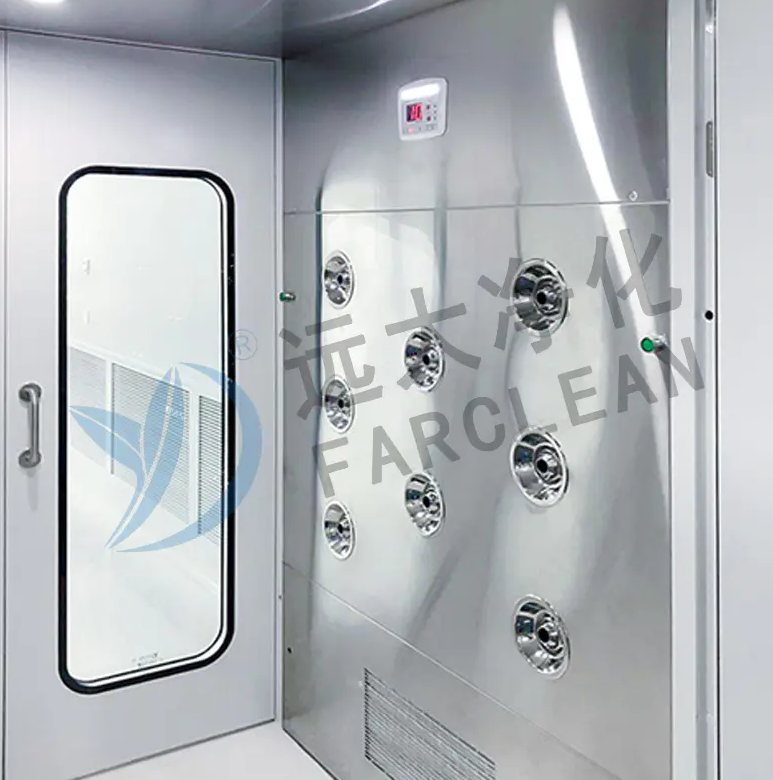
A pancuran udara ruangan bersih adalah lorong tertutup dan mandiri yang dipasang di pintu masuk fasilitas ruang bersih. Fungsi utamanya adalah menghilangkan kontaminasi partikulat – debu, serat, rambut, serpihan kulit, dan partikel lain di udara – dari personel dan peralatan sebelum memasuki lingkungan terkendali. Pancuran udara mencapai hal ini dengan mengarahkan pancaran udara berfilter HEPA atau berfilter ULPA berkecepatan tinggi ke orang atau benda yang melewatinya, mengeluarkan partikel yang terikat di permukaan dan membawanya keluar melalui kisi-kisi udara balik yang terhubung ke sistem filtrasi.
Pancuran udara berfungsi sebagai penghalang pengendalian kontaminasi yang penting dalam industri di mana bahkan partikel mikroskopis pun dapat menyebabkan cacat produk, kerusakan peralatan, atau kegagalan proses. Pabrik fabrikasi semikonduktor, ruang produksi farmasi, laboratorium bioteknologi, area perakitan komponen dirgantara, dan fasilitas produksi perangkat medis semuanya mengandalkan pancuran udara sebagai bagian dari strategi manajemen kontaminasi mereka. Tanpa langkah dekontaminasi ini, setiap orang yang memasuki ruang bersih akan membawa ribuan hingga jutaan partikel per menit yang terlepas secara alami dari pakaian dan kulit.
Teknologi Inti Dibalik Sistem Pancuran Udara
Teknologi di dalam pancuran udara ruangan bersih lebih canggih daripada yang ditunjukkan oleh tampilan penutupnya yang sederhana. Beberapa sistem terintegrasi bekerja sama untuk mencapai penghilangan partikel yang efektif dalam waktu siklus tipikal 15 hingga 30 detik.
Filtrasi HEPA dan ULPA
Landasan kinerja pancuran udara adalah kualitas filtrasi. Filter Udara Partikulat Efisiensi Tinggi (HEPA) menangkap setidaknya 99,97% partikel dengan diameter 0,3 mikrometer — ukuran partikel yang paling menembus untuk media filter berserat. Filter Udara Penetrasi Ultra Rendah (ULPA) menawarkan kinerja yang lebih baik lagi, menangkap 99,9995% partikel pada 0,12 mikrometer. Pilihan antara HEPA dan ULPA bergantung pada klasifikasi kebersihan ruang bersih target. Lingkungan ISO Kelas 5 dan di atasnya biasanya menggunakan filtrasi HEPA dalam pancuran udaranya, sedangkan pabrik semikonduktor ISO Kelas 3 dan Kelas 4 dapat menentukan ULPA agar sesuai dengan persyaratan kontrol partikel yang ketat dalam proses produksinya.
Integritas filter adalah yang terpenting. Kebocoran satu lubang jarum atau segel filter yang rusak dapat menyebabkan udara tanpa filter melewati seluruh media, sehingga menyebabkan sistem filtrasi tidak efektif. Inilah sebabnya mengapa filter pancuran udara diuji menggunakan pemindaian fotometer aerosol selama commissioning dan pada interval servis rutin, menggunakan tantangan aerosol dioctyl phthalate (DOP) atau Polyalphaolefin (PAO) untuk memverifikasi bahwa tidak ada kebocoran bypass di sekitar bingkai filter atau paking.
Desain Nosel Udara Kecepatan Tinggi
Pancuran udara mengalirkan udara yang disaring melalui serangkaian nozel yang disusun di dinding samping, langit-langit, atau lantai selungkup. Kecepatan nosel adalah parameter kinerja yang menentukan: sebagian besar spesifikasi pancuran udara memerlukan kecepatan pancaran udara antara 20 dan 30 meter per detik (kira-kira 4.000 hingga 6.000 kaki per menit) di pintu keluar nosel. Aliran udara berkecepatan tinggi ini menciptakan gaya aerodinamis yang cukup untuk mengatasi gaya perekat yang mengikat partikel pada permukaan kain, mengangkatnya ke dalam aliran udara dan membawanya menuju kisi-kisi udara kembali.
Orientasi dan pengaturan nosel sangat memengaruhi seberapa merata pancaran udara menutupi orang yang berada di dalam pancuran. Desain pancuran udara modern menggunakan nozel yang dapat disesuaikan, berputar, atau berosilasi yang menyapu pancaran udara ke seluruh tubuh daripada mengarahkan aliran tetap pada satu titik. Beberapa model canggih dilengkapi siklus rotasi nosel yang dapat diprogram yang mengubah arah pancaran beberapa kali selama satu siklus dekontaminasi, memastikan area kain terlipat, lengan, dan bagian belakang pakaian menerima aliran udara yang cukup. Jarak antar nosel juga harus dioptimalkan sehingga cakupannya kontinu tanpa ada zona mati yang memungkinkan partikel tetap tidak terganggu.
Sistem Pintu Saling Bertautan
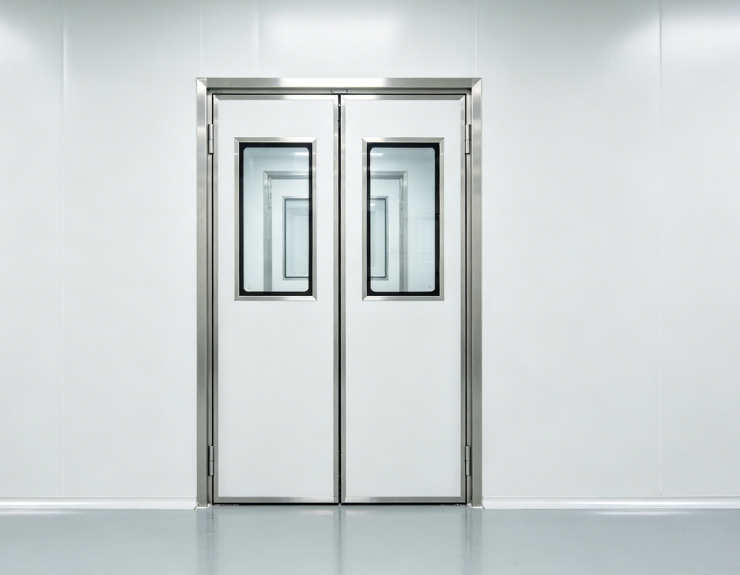
Fitur keselamatan dan pengendalian kontaminasi yang mendasar pada setiap pancuran udara adalah sistem pintu yang saling bertautan. Pintu masuk dan pintu keluar pancuran udara saling bertautan secara elektronik sehingga keduanya tidak dapat dibuka secara bersamaan. Hal ini mencegah terciptanya jalur aliran udara langsung antara koridor yang tidak terkendali dan interior ruang bersih – sebuah skenario yang memungkinkan udara yang terkontaminasi mengalir langsung ke ruang terkendali. Interlock ini juga memastikan bahwa siklus dekontaminasi berjalan hingga selesai sebelum pintu keluar dibuka, sehingga mencegah personel mempersingkat proses tersebut. Sistem interlock biasanya dikendalikan oleh pengontrol logika yang dapat diprogram (PLC) dan dapat diintegrasikan dengan sistem kontrol akses yang mencatat waktu masuk dan memutar data.
Faktor-Faktor Yang Menentukan Efisiensi Air Shower
Efisiensi dalam konteks pancuran udara berarti persentase partikel yang menempel di permukaan yang berhasil dihilangkan dari personel selama satu siklus dekontaminasi. Tidak ada pancaran udara yang dapat menghilangkan 100% — beberapa partikel tetap terperangkap di lipatan kain atau di area dengan aliran udara yang tidak memadai — namun sistem yang dirancang dengan baik dan beroperasi dalam kondisi yang benar dapat mencapai efisiensi penghilangan sebesar 80% hingga 95% untuk partikel yang lebih besar dari 0,5 mikrometer. Beberapa variabel mempunyai dampak langsung dan terukur terhadap angka ini.
| Faktor Efisiensi | Dampak terhadap Kinerja | Pendekatan Optimasi |
| Kecepatan pancaran udara | Kecepatan yang lebih tinggi mengeluarkan lebih banyak partikel | Pertahankan 20–30 m/s pada pintu keluar nosel |
| Durasi siklus | Siklus yang lebih panjang menghilangkan lebih banyak partikel | Tetapkan minimum 15–30 detik per siklus |
| Pola cakupan nosel | Zona mati mengurangi tingkat penghapusan | Gunakan nozel yang berputar atau berosilasi |
| Jenis pakaian | Pakaian ruang bersih dengan serat rendah melepaskan partikel jauh lebih sedikit | Mandatkan protokol pakaian yang sesuai |
| Perilaku personel | Rotasi lambat memperlihatkan seluruh permukaan tubuh | Latih staf untuk memutar lengan dan memutar selama bersepeda |
| Kondisi penyaring | Filter yang tersumbat mengurangi volume dan kecepatan udara | Pantau tekanan diferensial; ganti sesuai jadwal |
Opsi Konfigurasi Pancuran Udara dan Kriteria Seleksi
Pancuran udara tersedia dalam berbagai konfigurasi untuk menyesuaikan dengan tata letak fasilitas yang berbeda, persyaratan keluaran, dan klasifikasi ruang bersih. Memilih konfigurasi yang tepat memerlukan evaluasi batasan fisik lokasi instalasi dan persyaratan pengendalian kontaminasi lingkungan target.
Konfigurasi Satu Orang vs. Terowongan
Pancuran udara untuk satu orang adalah konfigurasi yang paling umum dan dirancang untuk memproses satu penghuni pada satu waktu di dalam ruangan kompak yang biasanya berukuran lebar 900 mm kali kedalaman 900 mm. Cocok untuk fasilitas dengan lalu lintas personel sedang di mana waktu siklus tidak menimbulkan hambatan. Pancuran udara bergaya terowongan adalah ruangan memanjang yang dapat menampung banyak orang secara bersamaan atau memungkinkan lewatnya kereta dan peralatan. Konfigurasi terowongan digunakan di lingkungan dengan throughput tinggi seperti pabrik farmasi besar di mana puluhan personel mungkin perlu masuk atau keluar ruang bersih dalam waktu singkat. Beberapa desain terowongan menggunakan aliran udara terus-menerus dibandingkan siklus terpisah, sehingga memungkinkan personel berjalan dengan kecepatan terkendali tanpa berhenti.
Pengaturan Nozzle Plafon, Dinding, dan Lantai
Susunan nosel menentukan permukaan tubuh mana yang menerima pelampiasan udara langsung. Konfigurasi nosel dinding samping merupakan standar di sebagian besar pancuran udara personel dan menargetkan batang tubuh, lengan, dan kaki. Pengaturan nosel langit-langit digunakan dalam pancuran udara peralatan di mana aliran udara dari atas ke bawah secara efektif membersihkan permukaan horizontal seperti bagian atas kereta dan rumah peralatan. Sistem kombinasi dengan nozel di ketiga permukaan — dinding, langit-langit, dan lantai — memberikan cakupan paling komprehensif dan dikhususkan untuk aplikasi kritis yang bahkan bagian bawah alas kaki dan roda peralatan harus didekontaminasi sebelum masuk ke ruang bersih.
Persyaratan Pemeliharaan untuk Efisiensi Berkelanjutan
Pancuran udara yang tidak dirawat dengan baik akan semakin kehilangan efektivitas dekontaminasinya, seringkali tanpa adanya indikasi eksternal yang jelas bahwa kinerjanya telah menurun. Program pemeliharaan terstruktur sangat penting untuk memastikan bahwa sistem terus memenuhi spesifikasi desain sepanjang masa operasionalnya.
- Filter pemantauan tekanan diferensial: pengukur magnehelik atau transduser tekanan elektronik mengukur penurunan tekanan pada filter HEPA atau ULPA. Saat filter memuat partikel yang ditangkap seiring waktu, penurunan tekanan meningkat. Ketika tekanan diferensial mencapai ambang batas penggantian pabrikan — biasanya 250 Pa untuk filter HEPA — filter harus diganti untuk mengembalikan volume aliran udara desain dan kecepatan nosel.
- Verifikasi kecepatan nosel: Kecepatan udara pada setiap nosel harus diukur dengan anemometer yang dikalibrasi setidaknya setiap tahun, atau setelah penggantian filter atau pemeliharaan blower. Setiap nosel yang mengalirkan kurang dari kecepatan minimum yang ditentukan harus diperiksa apakah ada penyumbatan, ketidaksejajaran, atau kebocoran saluran hulu.
- Pengujian integritas filter: pengujian tantangan aerosol menggunakan PAO atau DOP harus dilakukan setelah setiap penggantian filter dan setidaknya setiap tahun selama pengoperasian untuk memverifikasi bahwa tidak ada kebocoran bypass yang terjadi di sekitar rangka filter atau gasket.
- Pengujian fungsi interlock pintu: sistem pintu yang saling bertautan harus diuji secara fungsional pada setiap kunjungan pemeliharaan terjadwal untuk memastikan bahwa pintu masuk dan pintu keluar tidak dapat dibuka secara bersamaan dan bahwa pengatur waktu siklus mencegah pelepasan pintu keluar dini.
- Pembersihan permukaan bagian dalam: dinding, lantai, dan langit-langit ruangan pancuran udara mengumpulkan partikel yang ditangkap seiring waktu. Menyeka secara teratur dengan disinfektan yang sesuai dan sesuai dengan ruang bersih akan mencegah masuknya kembali partikel dan menjaga lingkungan kandang yang higienis sesuai dengan persyaratan pengendalian kontaminasi ruang bersih.
- Pemeriksaan motor blower dan sabuk: blower sentrifugal yang menggerakkan udara melalui filter dan sistem nosel harus diperiksa ketegangan sabuk, kondisi bantalan, dan getaran pada setiap interval perawatan terjadwal. Blower yang rusak akan mengurangi aliran udara, sehingga secara langsung mengganggu kecepatan nosel dan kinerja dekontaminasi.
Integrasi Dengan Protokol Pembersihan Ruang Bersih
Pancuran udara tidak beroperasi secara terpisah — keefektifannya pada dasarnya bergantung pada kualitas protokol pakaian yang digunakan sebelumnya. Personil yang memasuki pancuran udara dengan mengenakan pakaian jalanan atau pakaian ruang bersih yang tidak dipasang dengan benar akan mengeluarkan lebih banyak partikel daripada yang dapat dihilangkan oleh pancuran udara, terlepas dari seberapa baik sistem itu dirancang dan dipelihara. Pancuran udara harus diposisikan sebagai langkah terakhir dalam rangkaian pakaian multi-tahap, bukan sebagai pengganti pakaian yang tepat.
Urutan jubah dan pancuran udara yang terstruktur dengan benar untuk ruang bersih farmasi ISO Kelas 7 biasanya mengikuti urutan ini: lepaskan pakaian jalanan dan simpan di loker; mengenakan pakaian dalam atau coverall kamar bersih yang dicuci di fasilitas; pindah ke ruang ganti dan mengenakan setelan ruang bersih, tudung kepala, sarung tangan, dan penutup sepatu dengan urutan yang benar; melakukan kebersihan tangan; dan kemudian masuk ke pancuran udara untuk dekontaminasi akhir sebelum akses ruang bersih. Setiap langkah dalam rangkaian ini mengurangi beban partikel yang harus ditangani oleh pancuran udara, menjadikan sistem pengendalian kontaminasi secara keseluruhan lebih efektif dibandingkan tindakan apa pun yang dapat dilakukan sendirian.
Kemajuan Teknologi Pancuran Udara
Sistem pancuran udara modern telah berkembang jauh melampaui rakitan nosel filter blower sederhana. Beberapa kemajuan teknologi meningkatkan efisiensi dekontaminasi dan kecerdasan operasional fasilitas dalam desain pancuran udara.
- Integrasi penghitungan partikel: beberapa pancuran udara canggih dilengkapi penghitung partikel optik yang mengambil sampel udara di dalam selungkup selama dan setelah siklus dekontaminasi. Jika jumlah partikel di atas ambang batas yang ditentukan terdeteksi pada akhir siklus, sistem secara otomatis memperpanjang durasi siklus daripada mengizinkan akses, sehingga memberikan ukuran keberhasilan dekontaminasi secara langsung dan real-time.
- Kontrol blower penggerak frekuensi variabel (VFD): VFD memungkinkan kecepatan motor blower — dan juga kecepatan udara nosel — dikontrol dan disesuaikan secara tepat berdasarkan aplikasi. Hal ini memungkinkan pengoperasian hemat energi selama periode lalu lintas rendah dan kecepatan maksimum selama jendela throughput tinggi yang kritis.
- Konektivitas IoT dan pemantauan jarak jauh: sistem pancuran udara berjaringan dapat mengirimkan tekanan diferensial filter, data jumlah siklus, status interlock pintu, dan kondisi alarm ke sistem manajemen gedung (BMS) atau platform pemantauan ruang bersih khusus, memungkinkan penjadwalan pemeliharaan prediktif dan dokumentasi kepatuhan tanpa kunjungan inspeksi manual.
- Integrasi desinfeksi UV-C: beberapa pancuran udara farmasi dan bioteknologi kini menggunakan lampu pembasmi kuman UV-C yang aktif selama siklus dekontaminasi untuk memberikan pengurangan mikroba secara simultan bersamaan dengan penghilangan partikulat — mengatasi vektor kontaminasi kimia dan biologis dalam satu langkah awal.